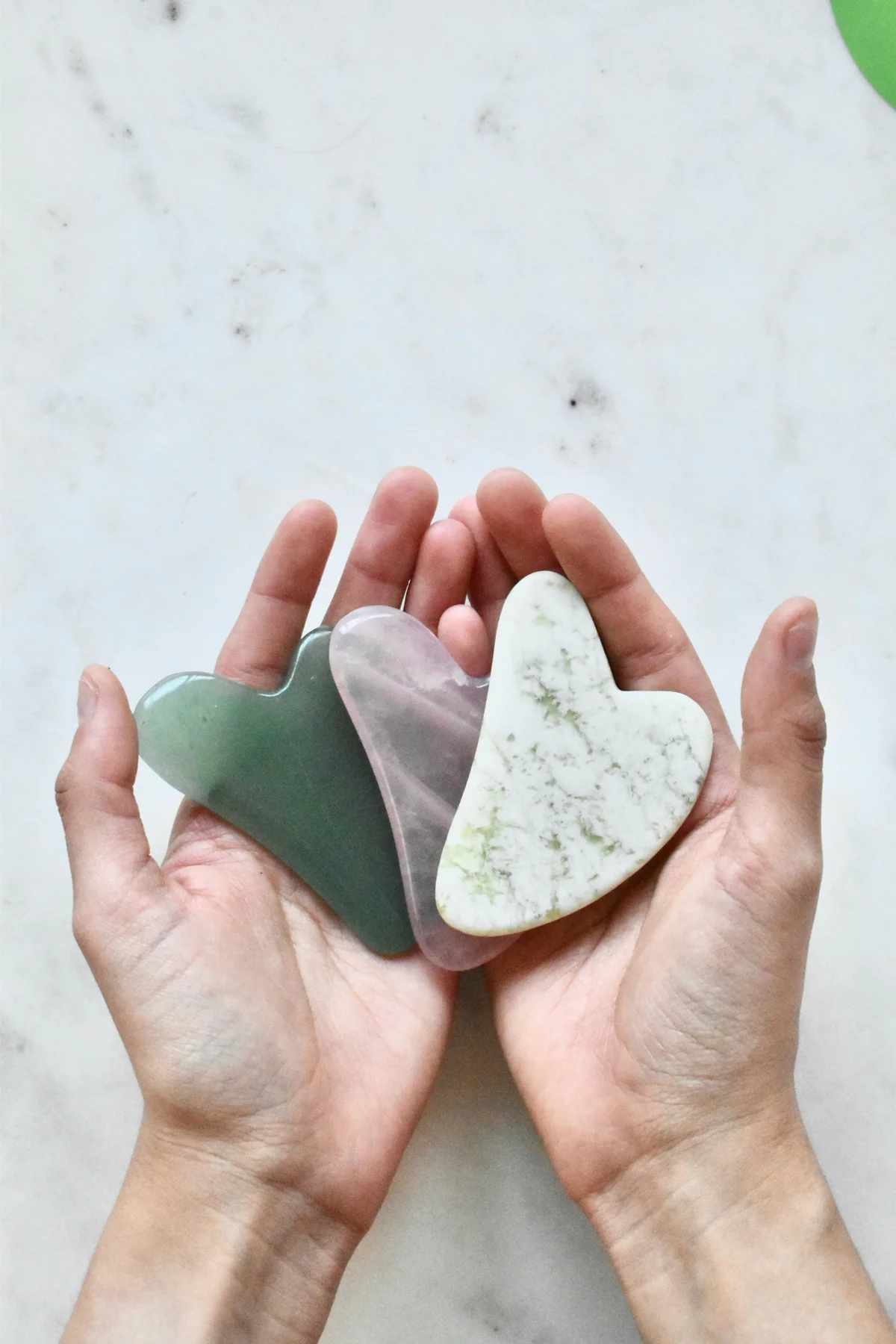
Gua Sha: The Science Behind the Scraping
Gua Sha (刮痧) is one of the oldest interventions in traditional Chinese medicine — and one of the most systematically misunderstood in the West.
It looks dramatic. The scraping marks (the sha) alarm people who have never seen them. It has been mistaken, in Western emergency departments, for signs of physical abuse. It has been dismissed as folk superstition by clinicians who never looked at the research.
The research is worth looking at.
What the words mean
Gua (刮) means to scrape, press, or rub the skin with a smooth-edged tool. Sha (痧) refers both to the transient vascular response — the petechiae that appear under the skin — and to the pathological process they represent: the stagnant, toxic metabolic waste being drawn to the surface.
In Polish traditional medicine the phenomenon is called siew (sowing), which vividly captures how the marks appear — red or purple points scattered across the skin like seeds.
Internationally the same technique appears as Kerikan (Indonesia, where copper coins are used), Cao gio (Vietnam), and in Western clinical literature as IASTM — Instrument Assisted Soft Tissue Mobilisation.
These are not the same technique with different names. They are regional adaptations of the same underlying intervention, each with its own tool, depth, and clinical tradition.
A lineage that starts before writing
Archaeological tools from the Palaeolithic period show smooth-edged stones whose shape closely matches modern Gua Sha instruments — evidence that humans have been doing this, instinctively, for tens of thousands of years.
The first written references to systematic scraping come from the Warring States period (475–221 BCE), where the technique was described for treating surface abscesses. The foundational TCM text Huangdi Neijing (Yellow Emperor's Classic of Internal Medicine, Han Dynasty, circa 1st century BCE) formalised the theoretical framework: health as unobstructed circulation of qi and xue (blood); illness as blockage; the role of mechanical intervention in restoring surface patency.
Zhang Zhongjing's Shang Han Lun (Treatise on Cold Damage, circa 220 CE) provided the six-stage model of pathogen invasion — Gua Sha being the primary intervention for the outermost stage, Tai Yang, before the pathogen penetrates deeper.
During the Song Dynasty (960–1279), jade plates were documented for use on the face to remove scars — the beginning of cosmetic Gua Sha. The Ming Dynasty (1368–1644) consolidated the technique under its current name, with detailed records of its use in epidemic disease, typhoid, and cholera.
The modern scientific chapter opened with clinical work by Dr Arya Nielsen, whose research introduced Gua Sha to the evidence base of Western integrative medicine. The enzyme mechanism was elucidated by Dr Hamid Ventsel's team in peer-reviewed haematology literature. These are not speculative translations — they are laboratory findings about what happens at the cellular level during and after a Gua Sha session.
What TCM says is happening
In classical TCM, three pathological states accumulate in the body and require Gua Sha to resolve:
| State | Origin | Presentation | What Gua Sha does |
|---|---|---|---|
| Stagnant Qi | Acute stress, emotional suppression, trauma | Migratory muscle tension, fascial stiffness | Restores meridian flow, immediately relieves muscle pain |
| Dead Qi | Years of untreated stagnation | Chronic tissue hypoxia, structural hardening | Activates deep microcirculation, restarts repair |
| Toxic Qi | Accumulated organic acids and metabolic waste | Chronic fatigue, lymphatic swelling, inflammation | Opens lymphatic drainage channels |
Wei Qi — the defensive energy that circulates just below the skin surface — governs thermoregulation and innate immunity. When external pathogens (Wind, Cold) invade the superficial layer, they constrict capillaries and produce chills, fever, and muscle aching. Gua Sha mechanically opens the pores, stimulates Wei Qi, and — in the TCM model — sweeps the pathogen outward. In Western terms: it initiates a controlled inflammatory response that clears the infection faster than it would resolve passively.
What the laboratory says is happening
A 400% increase in surface circulation
Laser Doppler flowmetry studies have shown that Gua Sha produces an immediate, fourfold increase in superficial microcirculation in the treated area. This elevated perfusion level persists for approximately 25 minutes after the physical intervention ends, facilitating lactic acid clearance and removal of pain mediators. Full return to baseline occurs at around 48 hours — the same window during which the marks are resolving.
This explains the immediate clinical effect: muscle tension that has been restricting blood flow for years is suddenly perfused. The relief is often felt within the session itself.
The HO-1 cascade: local treatment, systemic effects
The deeper mechanism is immunological. When capillaries rupture under the instrument, haemoglobin fragments are released into the interstitial tissue. The body processes these via haem oxygenase-1 (HO-1), an enzyme with powerful anti-inflammatory and cytoprotective properties.
The biochemical reaction:
Haem + 3O₂ + NADPH → Biliverdin + CO + Fe²⁺ + NADP⁺ + H₂O
Each product has a specific therapeutic role:
- Biliverdin → immediately reduced to bilirubin, one of the most potent endogenous antioxidants, protecting cell membranes from lipid peroxidation
- Carbon monoxide (CO) → acts as a gaseous signalling molecule: vasodilator, inhibitor of pro-inflammatory cytokines (TNF-α, IL-1β), and pain receptor desensitiser
- Fe²⁺ → rapidly sequestered by ferritin, preventing free radical generation via Fenton reactions
Bioluminescence imaging in transgenic mice showed that HO-1 upregulation after Gua Sha occurs not only in the skin but in the liver, kidneys, and intestines — which explains why Gua Sha of the upper back produces systemic anti-inflammatory effects far beyond the treated zone.
Fascial remodelling
From a physiotherapy perspective, Gua Sha is a form of mechanical fascial intervention. Fascia is the continuous three-dimensional connective tissue network surrounding and integrating every muscle, bone, nerve, and organ. When it becomes densified — through chronic stress, habitual posture, or old injury — it generates pain and restricts movement, often in areas far from the restriction itself.
Gua Sha introduces shear forces that produce micro-damage to degenerate collagen, stimulating fibroblasts to lay down new collagen and elastin. The pressure also induces thixotropy — the transition of fascial ground substance from a semi-solid (gel) state to a liquid (sol) state — which restores the sliding plane between tissue layers, reduces thickness of the thoracolumbar fascia (TLF) in people with chronic low back pain, and immediately improves spinal flexibility.
In a 2024 study on chronic non-specific low back pain (CNSLBP), four weekly Gua Sha sessions produced statistically significant reduction in TLF thickness (p=0.005) and improved elasticity — effects not seen in the heat therapy control group.
Reading the marks: what the sha tells you
The colour, density, and disappearance rate of sha marks is a direct diagnostic signal. In classical TCM this is read as follows; in Western terms, it reflects local metabolic state and circulatory competence.
| Sha colour | TCM reading | Physiological correlate | Resolution |
|---|---|---|---|
| Pale pink / no marks | Healthy tissue OR deep deficiency (xu) | Good vascular response OR significant anaemia | Hours to 1 day |
| Bright red | Early heat invasion, surface toxins | Mild vascular response, quick clearance | 1–2 days |
| Deep purple | Chronic blood stagnation, structural pain | Extravasation of deoxygenated blood, tissue hypoxia | 5–10 days |
| Dark green / near-black | Extreme toxic Qi accumulation | Advanced local acidosis, depleted venous drainage | 1–2 weeks |
| Yellow tint (as marks resolve) | Dampness-Heat, active detox | Haemoglobin catabolism to bilirubin | Transitional phase |
| Absence / pallor | Qi and Blood deficiency, Cold invasion | Significant vasoconstriction, lack of vascular reserve | — |
Progressive lightening of marks across sessions is clinical evidence that the therapy is working — the same tissue that produced near-black marks in session one may produce bright pink in session four.
Gua Sha on the face
Facial Gua Sha differs from body work in depth and intention. The face is not scraped to the point of petechiae — the tool moves with lighter pressure over oiled skin, primarily affecting lymphatic flow, fascial tension, and meridian stimulation.
The relevant meridians and their clinical correlates:
| Face zone | Meridian | Organ / emotional correlate | Clinical and aesthetic effect |
|---|---|---|---|
| Forehead | Bladder (BL), Small Intestine (SI) | Bladder system, mental anxiety | Smoothing expression lines, reducing eyelid puffiness |
| Between brows | Liver (LV), Gallbladder (GB) | Liver toxicity, suppressed anger | Softening the frown line, releasing the corrugator |
| Under-eye | Stomach (ST), Kidney (KI) | Kidney function, fluid balance | Reducing under-eye bags and shadows |
| Cheeks / nasolabial | Stomach (ST), Large Intestine (LI) | Respiratory, digestion | Improving skin elasticity, cheek lifting |
| Jawline / chin | Spleen (SP), Stomach (ST) | Hormonal, glucose metabolism | Defining the jaw, reducing lymphatic congestion |
Facial Gua Sha at Body Kind is incorporated into the Premium TCM Therapy session, not offered as a standalone cosmetic treatment. The meridian logic of face work is inseparable from the full clinical picture.
What the clinical evidence shows
| Study | Condition | Comparison | Result |
|---|---|---|---|
| Braun et al. (2011) | Chronic neck pain (n=48) | Gua Sha vs heat therapy | −29.9 mm reduction on VAS pain scale (p < 0.001) |
| CNSLBP Study (2024) | Chronic low back pain (n=32) | 4x Gua Sha vs 4x heat | Significant TLF thickness reduction (p=0.005); no change in heat group |
| Fibromyalgia RCT (2010) | Fibromyalgia (n=120) | Gua Sha vs acupuncture | Greater reduction in tender points (MD −5.0) and pain intensity (MD −9.5) |
| Yuen et al. (2019) | Chronic low back pain, elderly (n=12) | Gua Sha vs warm compress | Drop in TNF-α and HO-1 serum markers; VAS improvement p=0.0003 |
Additional documented applications: migraine headache, post-herpetic neuralgia, perimenopausal symptom reduction, and — in combination with myofascial release — treatment of axillary web syndrome after mastectomy.
Contraindications
Gua Sha has a strong safety profile but requires a clinical intake interview before every session.
Absolute contraindications:
- Haemophilia, thrombocytopenia, or anticoagulant medication (warfarin, heparin, rivaroxaban)
- Active infection with high fever
- Deep vein thrombosis
- Skin cancer in the treatment zone
- Severe cardiovascular insufficiency or uncontrolled hypertension
Local contraindications (in treatment area):
- Fresh wounds, burns (including sunburn), ulcerations
- Active skin inflammation in flare — severe psoriasis, eczema, acute dermatitis
- Large pigmented lesions, moles
During pregnancy: Gua Sha on the abdomen and lower back is absolutely contraindicated. Points with emmenagogic or uterotonic effects must be avoided at all gestational stages.
After aesthetic medicine procedures: No facial Gua Sha within 4 weeks of botulinum toxin or hyaluronic acid filler injection — mechanical pressure and local hyperaemia can cause toxin migration or filler displacement.
Re-treatment timing: A new Gua Sha session on the same area should only be performed after full resolution of the sha marks (typically 3–7 days, up to 2 weeks for first sessions or deep chronic restriction).
After your session
Because Gua Sha temporarily dilates vessels and opens the skin surface, the body is transiently more vulnerable to external pathogens — what TCM calls Wind and Cold invasion.
For 3–4 hours after a session: cover the treated area with warm clothing, avoid cold air and air conditioning, avoid showering or bathing, drink only warm water, eat lightly.
Avoid intense exercise within 24 hours — the body is in active detoxification and recovery, and performance may be transiently reduced.
Gua Sha is offered as part of the Chinese Cupping & Gua Sha (60 min, 250 PLN) and Premium TCM Therapy (120 min, 420 PLN) sessions at Body Kind Studio — Mikołajska 11/13, Kraków Old Town, 3 minutes from the Main Square.
Local or have the app?
Book instantly via BooksyTourist or need help?
Message on WhatsApp